

If you’ve ever stood in your kitchen staring at the wall separating it from the dining room or living area, you’re not alone. That wall is one of the most debated features in homes across the DMV — and in 2026, more homeowners are deciding it’s time for it to go.
According to the 2026 Houzz Kitchen Trends Study, 52% of renovating homeowners modify their kitchen’s layout, and of those who expand their kitchen footprint, 25% take the space directly from the dining room.
Kitchen remodeling in Northern Virginia has shifted in recent years. Homeowners aren’t just chasing an aesthetic trend anymore. They’re rethinking their layouts based on how they actually use their homes — juggling remote work, supervising homework, prepping meals, and hosting guests, often all at the same time. The kitchen has become the center of everything, and a closed-off floor plan gets in the way.
So is knocking down that wall worth it? In most cases, absolutely — but only when the project is planned correctly. Here’s what you need to know before you pick up the sledgehammer.
Why Open-Concept Kitchens Are So Popular in the DMV
A large number of homes across Northern Virginia, Maryland, and Washington D.C. were built with compartmentalized floor plans — separate rooms for cooking, eating, and living. These layouts made sense decades ago, but they don’t reflect how modern families use their homes.
Removing a wall between the kitchen and an adjacent room creates a single, flowing space that feels larger, brighter, and more connected. Natural light travels further without walls blocking it, sightlines open up across the entire main floor, and the cook is no longer cut off from the rest of the household. For homeowners considering a kitchen renovation in Fairfax VA, Arlington, or Alexandria — where square footage comes at a premium — an open-concept remodel makes what you already have work significantly harder without the cost of an addition.
There’s also a practical reality driving the trend. The kitchen isn’t just where meals happen anymore. It’s a homework station, a remote workspace, and the default gathering spot when friends come over. A kitchen remodel in Arlington VA or anywhere in the DMV that opens the floor plan doesn’t just look better — it supports the way families actually live in 2026.
What’s Actually Involved in the Renovation
This is where planning matters most. Not every wall can simply be removed, and the first question any homeowner needs answered is whether the wall in question is load-bearing — meaning it’s supporting structural weight from the floor above or the roof.
If the wall is load-bearing, it can still come down, but it requires a properly engineered support beam installed in its place. This is not a DIY project. A licensed contractor needs to evaluate the framing, specify the correct beam size, and ensure everything meets local building codes. Northern Virginia jurisdictions like Fairfax County, Arlington, and Alexandria each have their own permitting requirements for structural modifications, and skipping that step can create serious problems down the road.
Beyond the structural work, an open-concept kitchen renovation typically involves:
- Rerouting electrical wiring to accommodate a new layout and updated lighting plans
- Relocating plumbing lines, especially if you’re adding or repositioning a kitchen island with a sink
- Adjusting HVAC ductwork to maintain proper airflow across the larger, combined space
- Refinishing or replacing flooring so it runs seamlessly between the old and new areas
A design-build kitchen remodel in the DMV simplifies all of this. At DCI Construction, the structural evaluation, permit coordination, engineering, and construction are handled under one roof — so homeowners aren’t left managing multiple contractors and hoping everything comes together.
Design Decisions That Make or Break the Project
Opening up a kitchen is about more than demolition. The real value of an open-concept kitchen renovation in the DMV comes from rethinking the entire layout once that wall is gone. These are the decisions that separate a great kitchen remodel in Northern Virginia from one that falls flat.
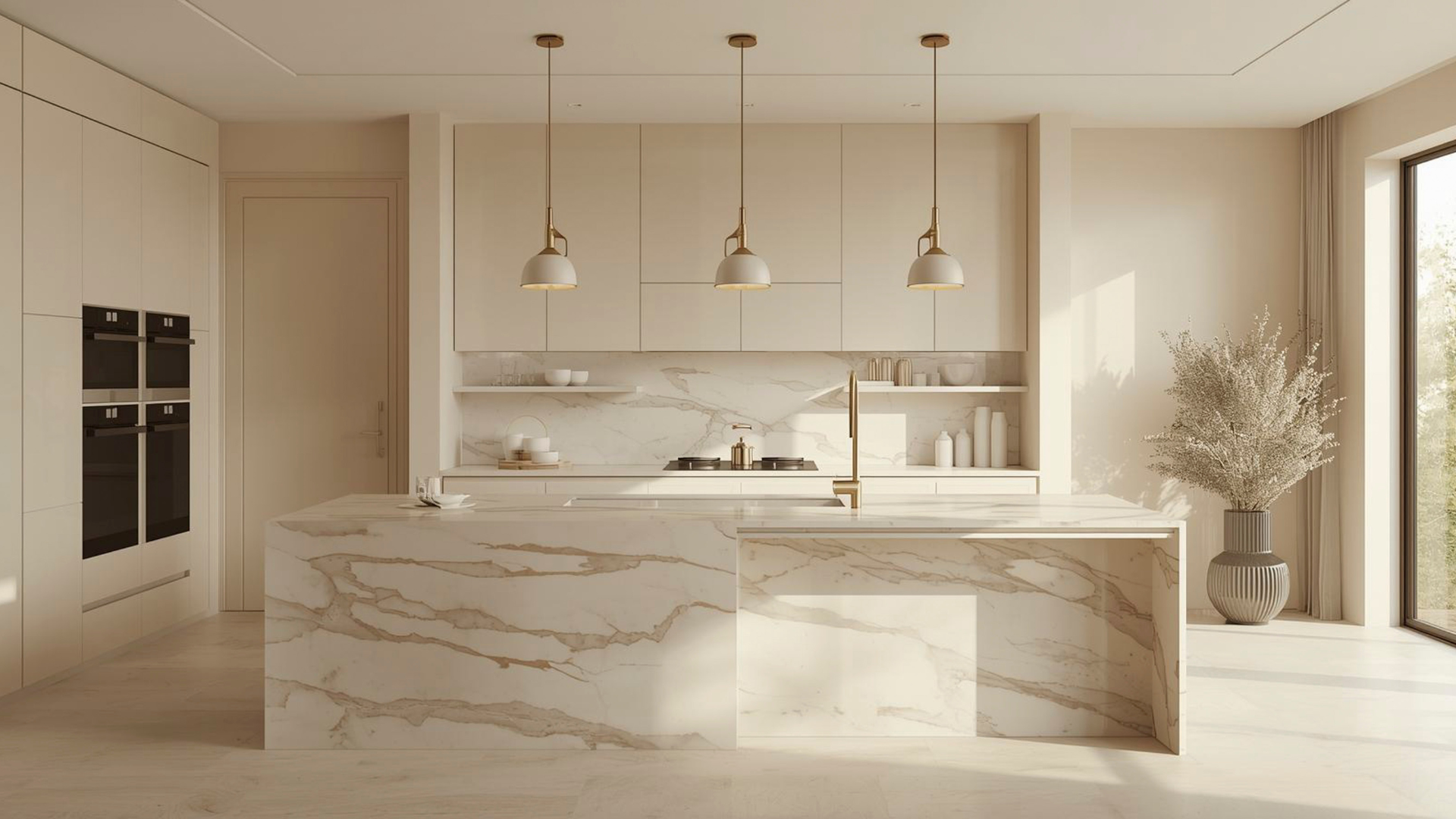
Island placement and function. The kitchen island often becomes the centerpiece of an open-concept layout. It defines the cooking zone, provides seating, and creates a natural boundary between the kitchen and living areas. Getting the dimensions right is critical — you need at least 36 to 42 inches of clearance on all sides for comfortable traffic flow. Too large and it blocks movement; too small and it doesn’t serve its purpose.
Unified flooring. When two rooms become one, mismatched flooring is immediately noticeable. Most homeowners opt for luxury vinyl plank or continuous hardwood that runs through the entire space, eliminating awkward transition strips and creating a cohesive look from the kitchen through the living and dining areas.
Layered lighting. A single overhead fixture won’t cut it in a combined space. Successful open-concept kitchens use a mix of recessed ceiling lights for general illumination, pendant lights over the island for task lighting and visual appeal, and under-cabinet lighting to brighten countertop work areas. This layered approach creates natural zones within the larger room.
Storage strategy. Removing a wall often means losing upper cabinets — and the storage that came with them. A thoughtful redesign accounts for this by incorporating a dedicated pantry wall, deeper base cabinets with pullout organizers, or custom built-in shelving elsewhere in the layout. The goal is to gain openness without sacrificing function.
Countertop and material selection. In an open-concept layout, the kitchen is always on display. That makes material choice more important than ever. Durable, low-maintenance surfaces like engineered quartz and natural stone hold up to daily use while looking polished from across the room — no more hiding scuffed laminate behind a closed door.
| Design Element | Recommended Option | Why It Matters |
|---|---|---|
| Flooring | Luxury vinyl plank or continuous hardwood | Creates a seamless look across the full space |
| Island Clearance | 36–42 inches on all sides | Ensures comfortable traffic flow and functionality |
| Lighting | Recessed + pendants + under-cabinet | Creates zones and eliminates dark spots |
| Storage | Pantry wall, deep base cabinets, built-ins | Replaces lost upper cabinet storage |
| Countertops | Engineered quartz or natural stone | Durable, low-maintenance, and always visible |
How Much Does an Open-Concept Kitchen Remodel Cost in Northern Virginia?
Costs vary depending on the scope of work, materials selected, and the structural complexity of the wall removal. Here’s what homeowners can generally expect for kitchen remodel cost in Northern Virginia as of 2026:
Wall removal with beam installation: $5,000–$15,000 depending on the span of the opening, the type of beam required, and the engineering involved. Non-load-bearing walls fall on the lower end, while longer spans requiring steel beams and additional structural support push costs higher.
Full open-concept kitchen renovation: $40,000–$90,000+ when combining the structural work with new cabinetry, countertops, appliances, flooring, and a redesigned lighting plan. Higher-end material selections and larger kitchens can push this number further.
It’s worth noting that the DMV market runs above national averages for both labor and materials. Skilled tradespeople are in high demand across Northern Virginia, and that’s reflected in project pricing. But the investment pays back. Kitchen remodels consistently rank among the top home improvement projects for return on investment — minor kitchen remodels deliver over 100% ROI at resale according to recent industry data.
DCI Construction also brings an advantage most remodeling firms don’t: our parent company, DC Investment Construction Group, operates a full-service real estate division. That means we don’t just know how to build kitchens — we know what DMV buyers are actively looking for. When we design your renovation, we’re thinking about how the space works for you today and how it positions your home for maximum value when it matters most.
Is an Open-Concept Kitchen Right for Your Home?
For most homeowners considering kitchen remodeling in Northern Virginia, the answer is yes. But it’s worth thinking through a few practical realities before committing:
- Noise and cooking smells travel freely in an open layout. If you do a lot of heavy cooking, a quality range hood vented to the exterior is a must — not optional.
- Visual clutter becomes more visible when guests can see the kitchen countertops from the living room. Built-in storage solutions and a well-planned pantry help keep things tidy.
- Structural feasibility varies from home to home. Some walls carry more load than others, and older homes across the DMV may require additional engineering evaluation before any work begins.
Timeline is another common question. A straightforward wall removal with minor updates can often be completed in two to three weeks. A full open-concept kitchen renovation — including new cabinetry, countertops, flooring, and appliances — typically takes six to ten weeks depending on material lead times and the complexity of the structural and mechanical work.
In every case, the right first step is a professional assessment. A qualified contractor can tell you exactly what’s possible in your home before you commit to a plan or a budget.
Ready to Open Up Your Kitchen?
At DCI Construction, we’ve helped homeowners across Northern Virginia, Washington D.C., and Maryland transform closed-off kitchens into the bright, connected spaces they’ve been imagining. As a Class A licensed general contractor and full-service design-build firm, we handle every phase of the project — from the initial structural evaluation and permit filing through design, construction, and finishing.
And because DCI is part of the DC Investment Construction Group, which also operates a real estate division, we bring a perspective most contractors simply don’t have. We build kitchens that work beautifully for your life today and position your home to stand out in tomorrow’s market.
The best place to start is a conversation. Request your free estimate at construction.dc-icg.com or call us today to schedule a consultation. We’ll walk through your home’s layout, discuss what’s structurally possible, and help you understand the full timeline and investment before any work begins.
Frequently Asked Questions
How do I know if my kitchen wall is load-bearing?
The most reliable way is to have a licensed contractor or structural engineer evaluate it in person. As a general rule, walls that run perpendicular to your floor joists or sit directly above a beam in the basement are more likely to be load-bearing. However, guessing isn’t worth the risk — a professional assessment takes the uncertainty out of it and is always the recommended first step before planning any wall removal.
How long does an open-concept kitchen remodel take?
It depends on the scope. A straightforward wall removal with minor updates typically takes two to three weeks. A full open-concept kitchen renovation — including new cabinetry, countertops, flooring, appliances, and lighting — usually runs six to ten weeks. Material lead times, permit approvals, and the complexity of the structural work can all affect the timeline.
Do I need a permit to remove a wall in Northern Virginia?
In most cases, yes. Fairfax County, Arlington, and Alexandria all require permits for structural modifications, electrical rerouting, and plumbing changes. Even if the wall isn’t load-bearing, the mechanical work involved in an open-concept renovation will typically trigger permit requirements. DCI Construction handles all permit coordination as part of our design-build process so homeowners don’t have to navigate it on their own.
Will an open-concept kitchen increase my home’s value?
Kitchen remodels are consistently among the top home improvement projects for return on investment in the DMV market. Opening up the floor plan is especially appealing to today’s buyers, who prioritize connected living spaces, natural light, and functional layouts. While exact returns depend on the quality of the renovation and your specific neighborhood, a well-executed open-concept kitchen remodel is one of the strongest investments you can make in your home.
Can I add a kitchen island as part of an open-concept remodel?
Absolutely — and most homeowners do. The island typically becomes the centerpiece of the new layout, serving as a prep surface, casual dining spot, and natural divider between the kitchen and living areas. If you want a sink or dishwasher in the island, plumbing lines will need to be extended, which your contractor should plan for early in the design phase. At DCI Construction, island design and placement are part of every open-concept kitchen project we take on.